Overview
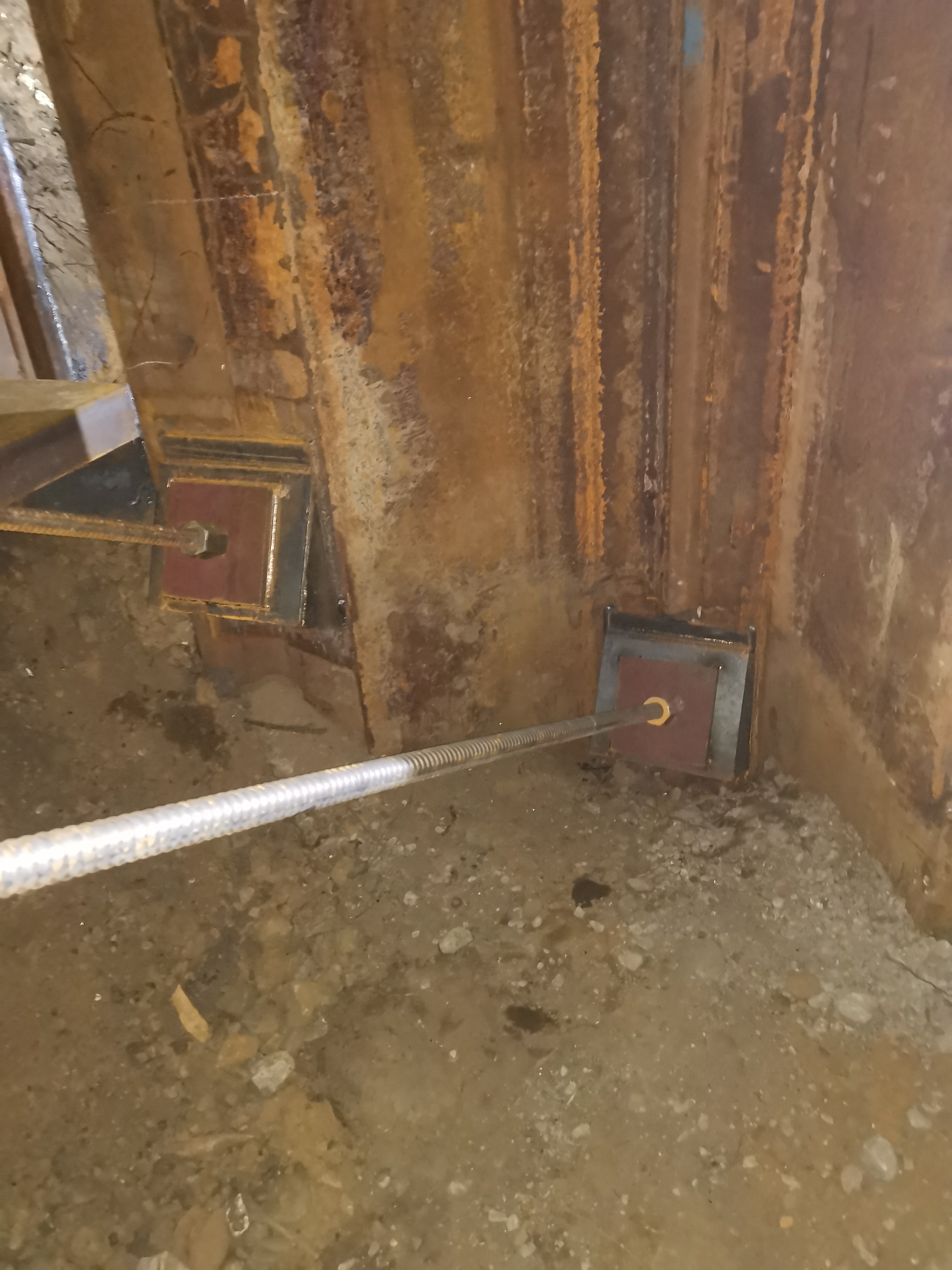
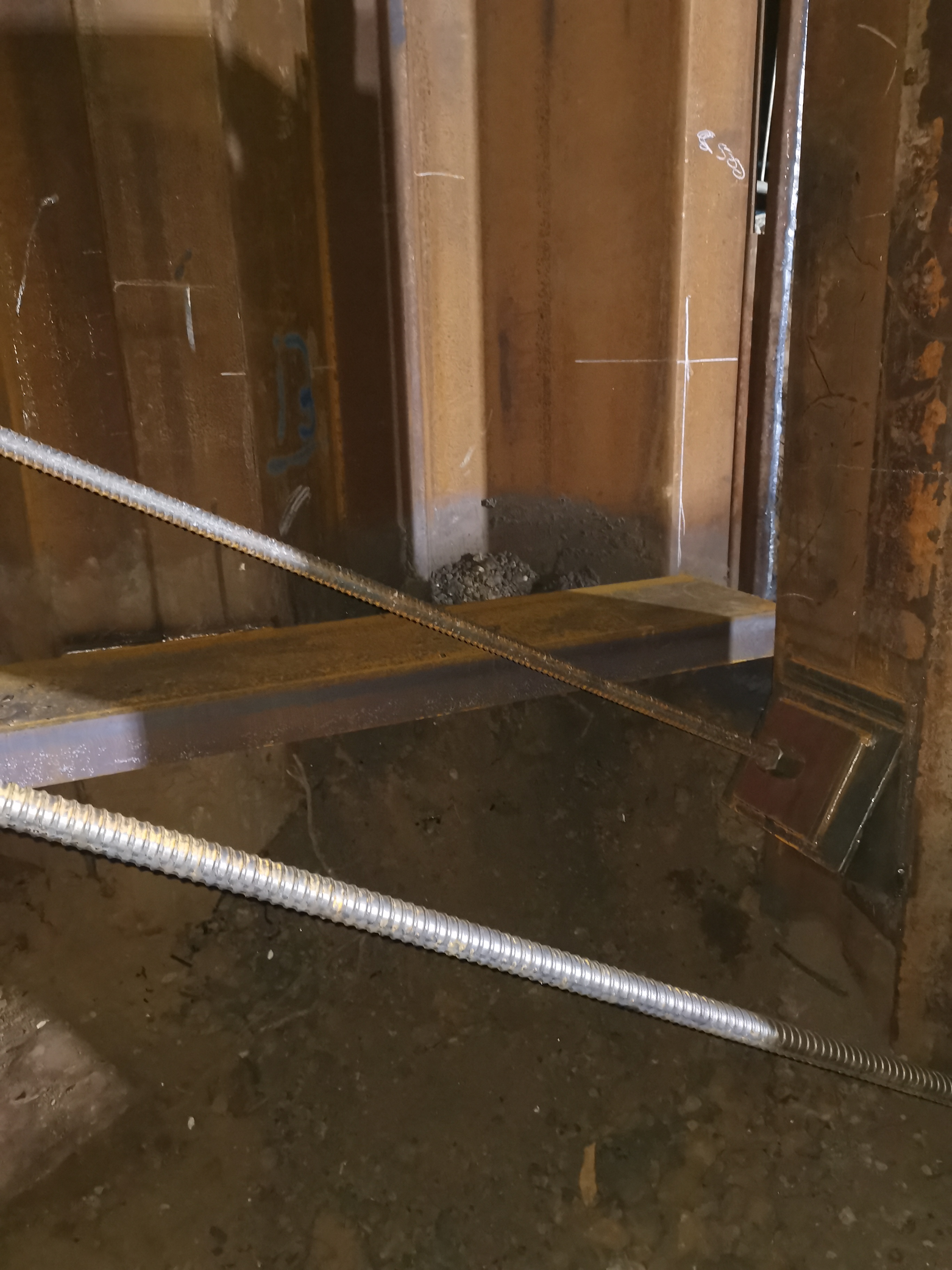
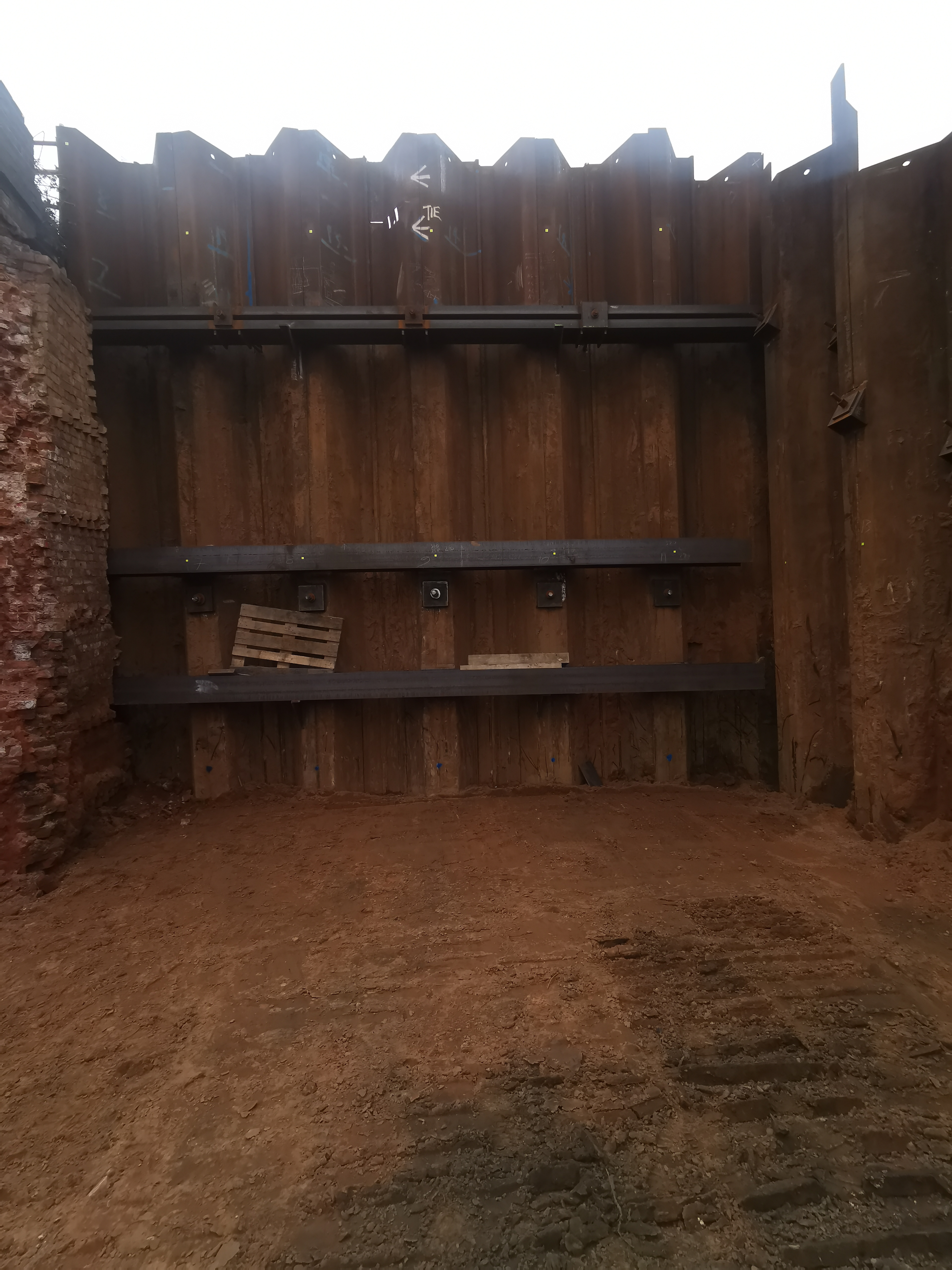
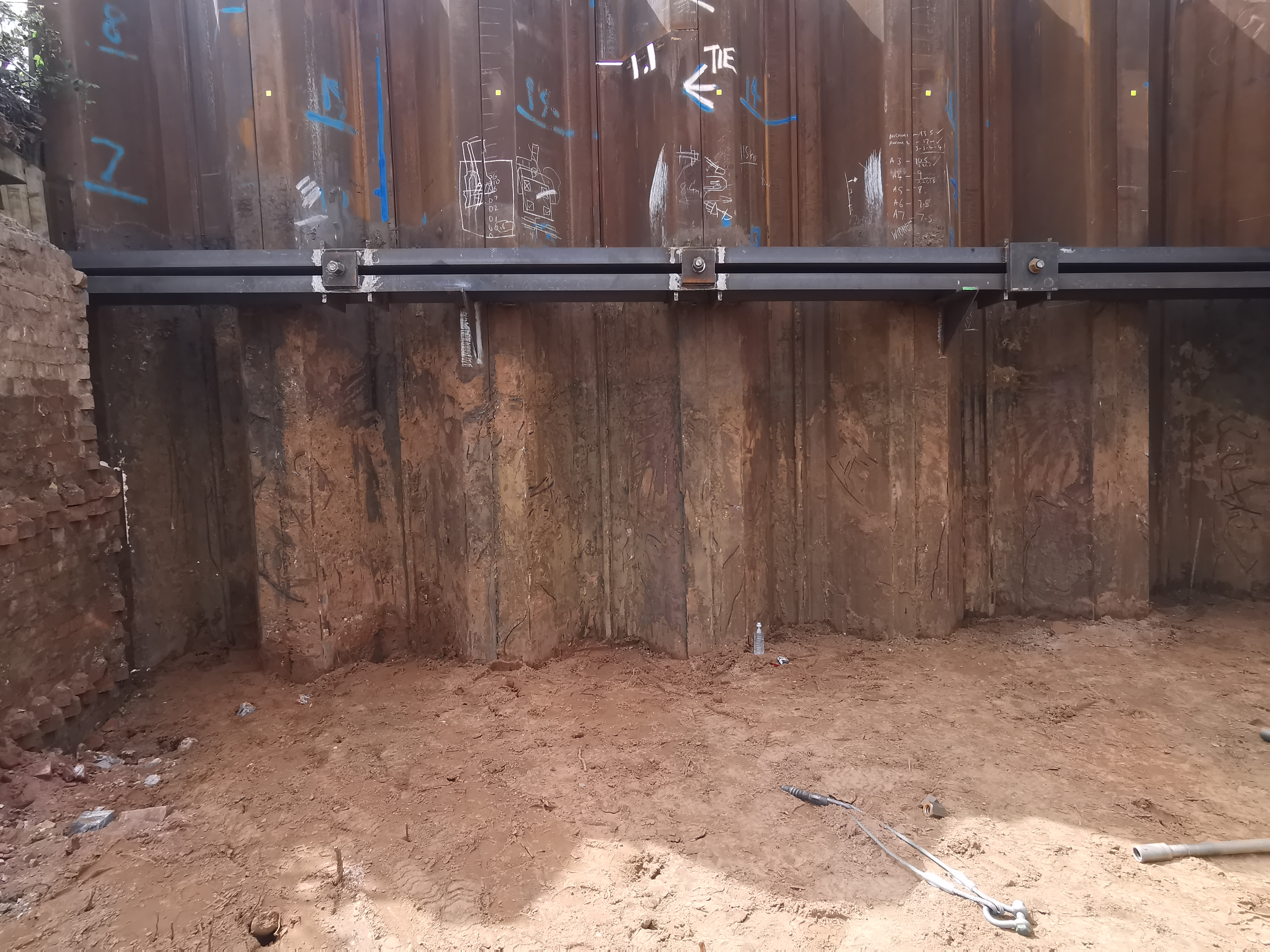
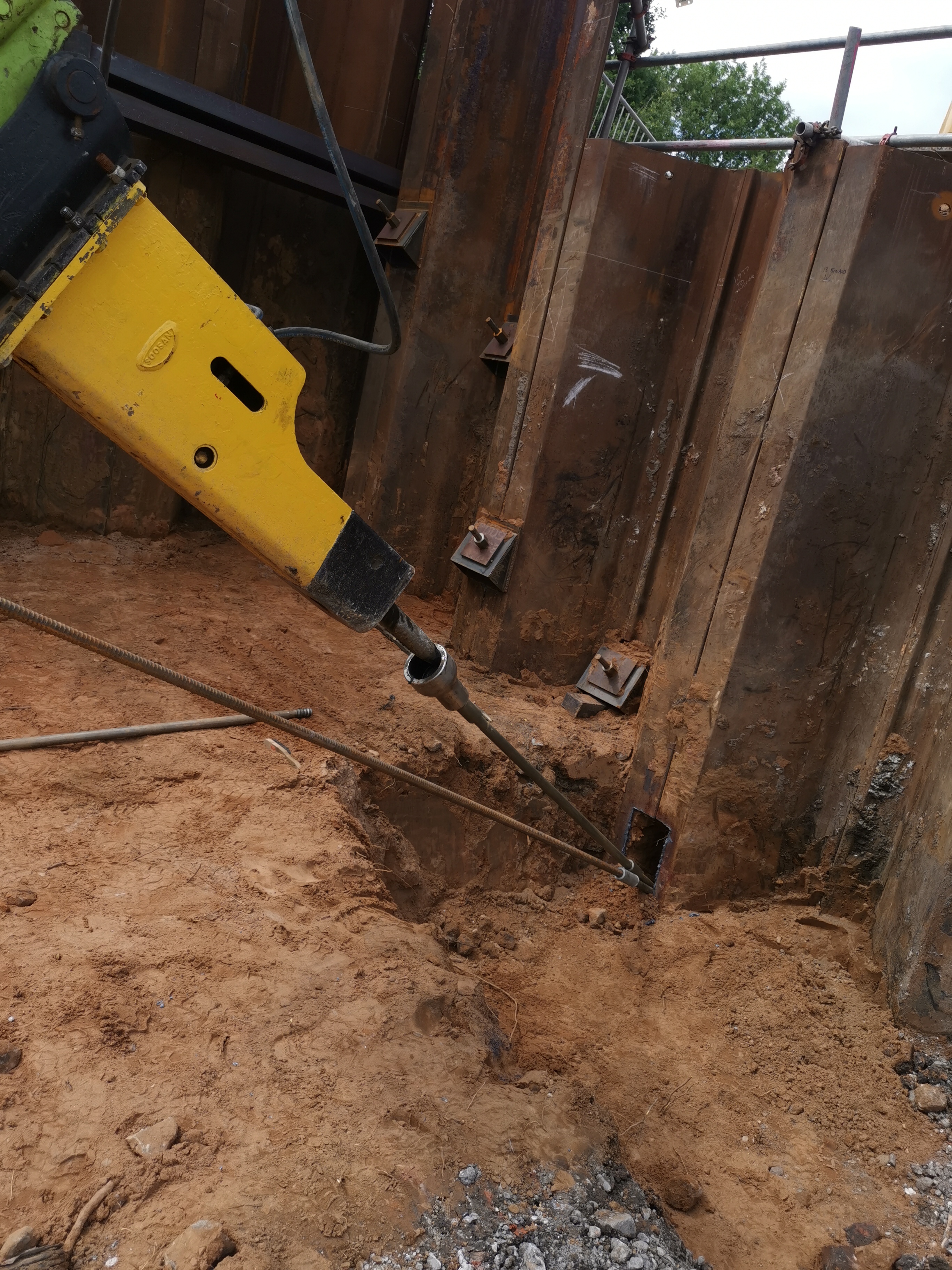
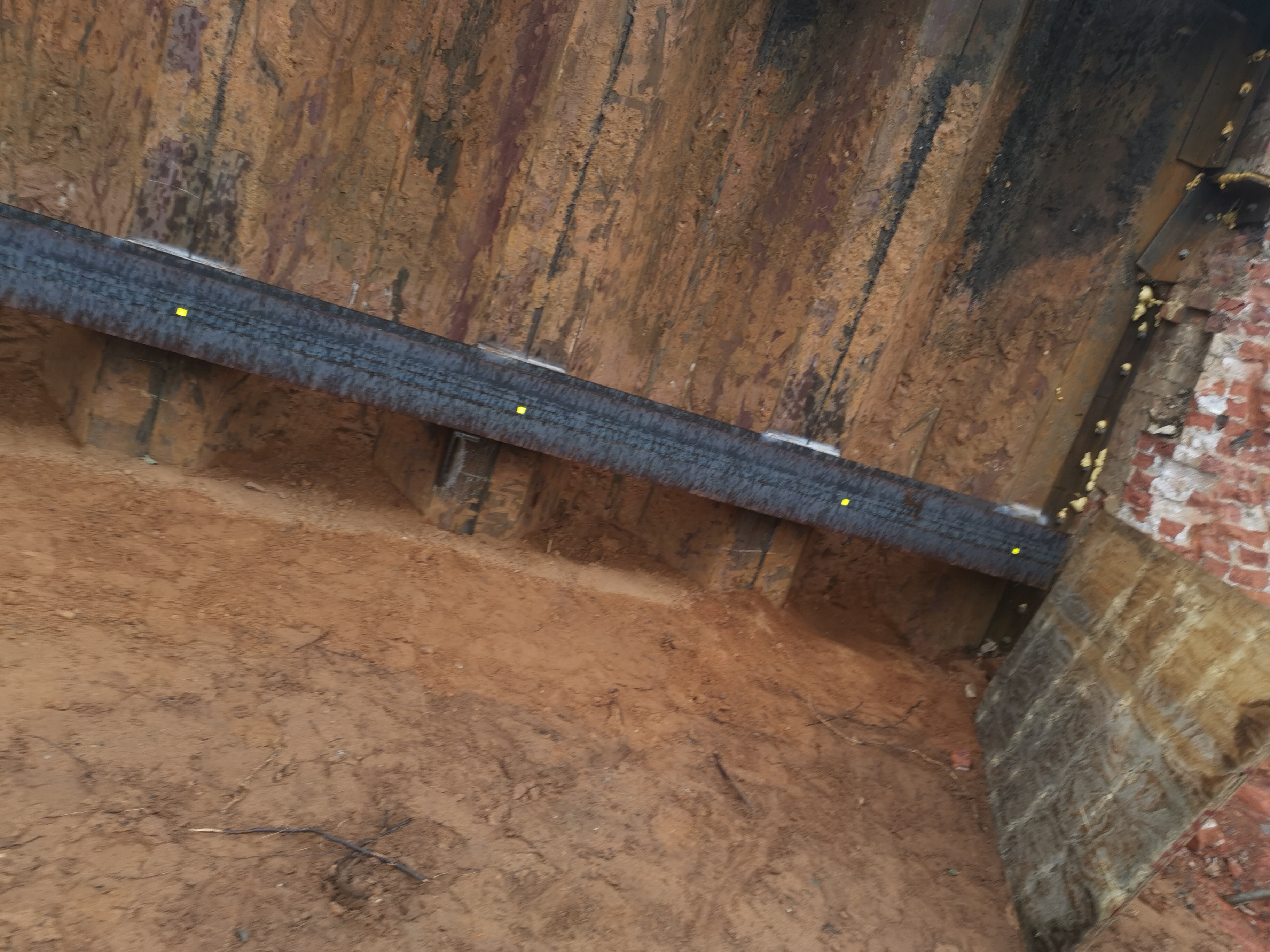
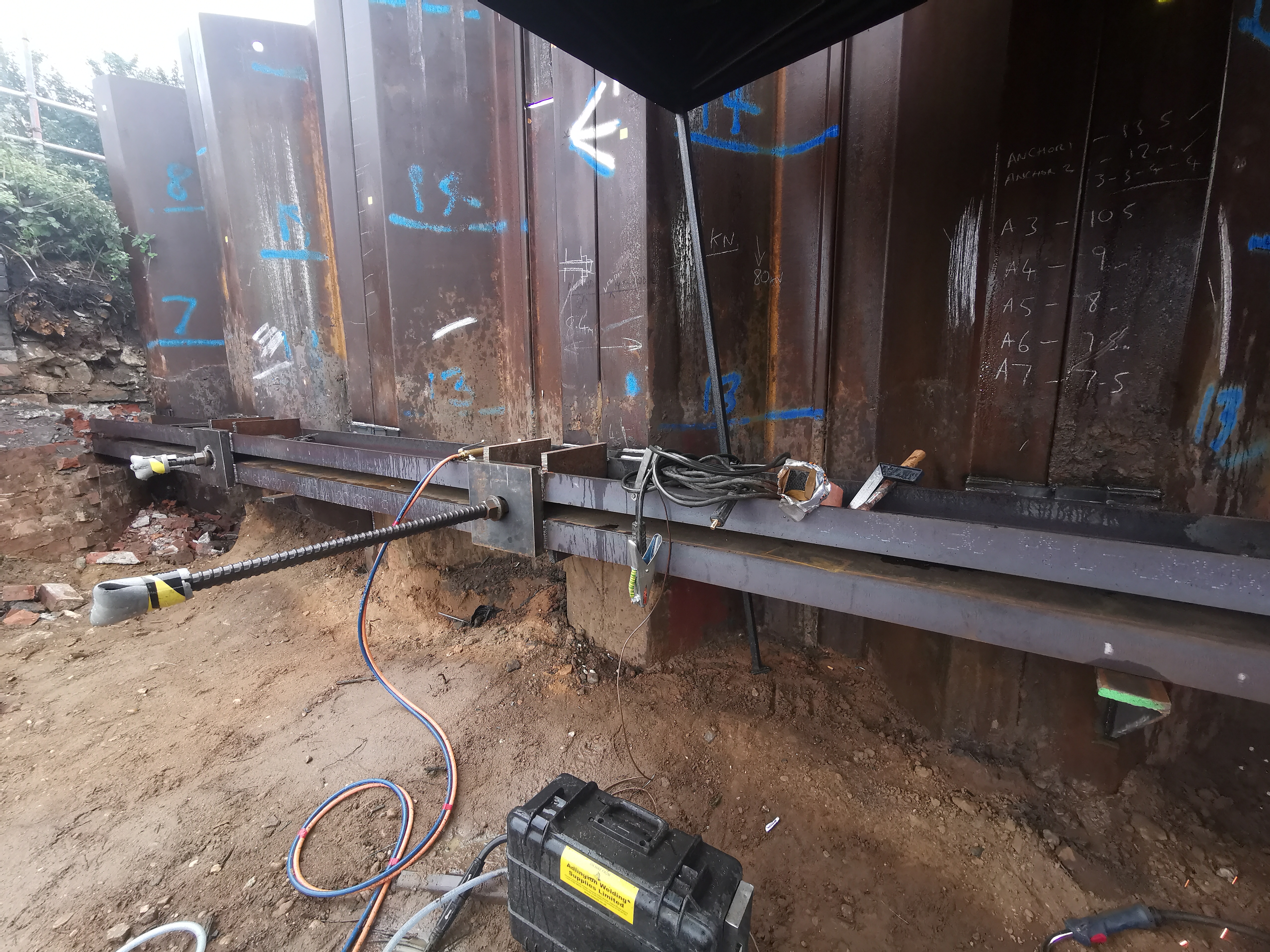
Built a staged tie-back system so crews could remove the old bridge and widen the road beneath an active rail track. We welded support beams to sheet piles, added anchor plates at each opening, drilled through the abutment, and pulled tie rods across both faces to stop the piles spreading as each dig level opened up.
Scope & Methods
- Worked top-down: sheet piles driven, then welded beams and anchor plates installed at the first dig level.
- Directionally drilled through the abutment to the opposite face, pulled tie rods through, and fitted beams/plates on the far side.
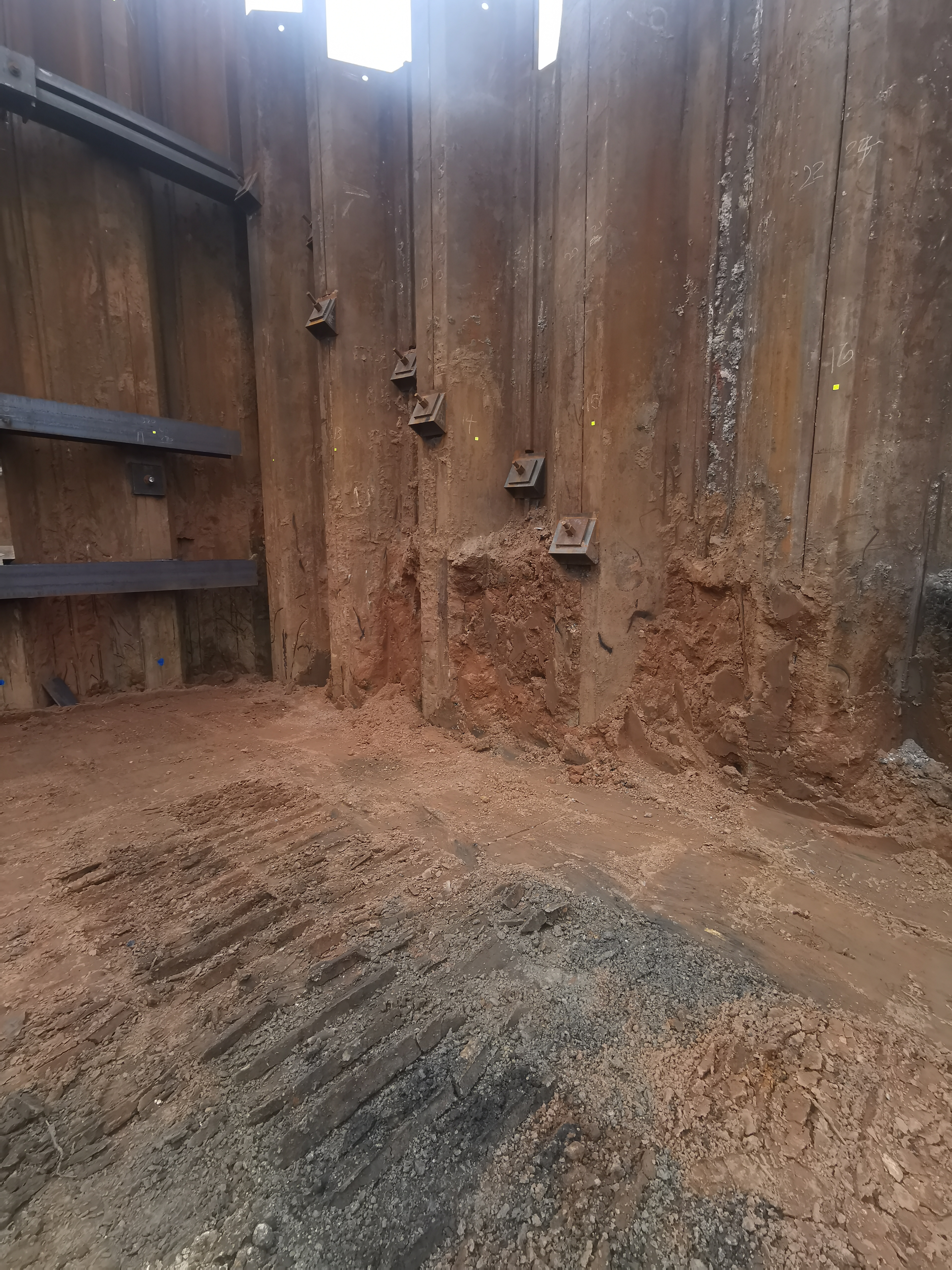
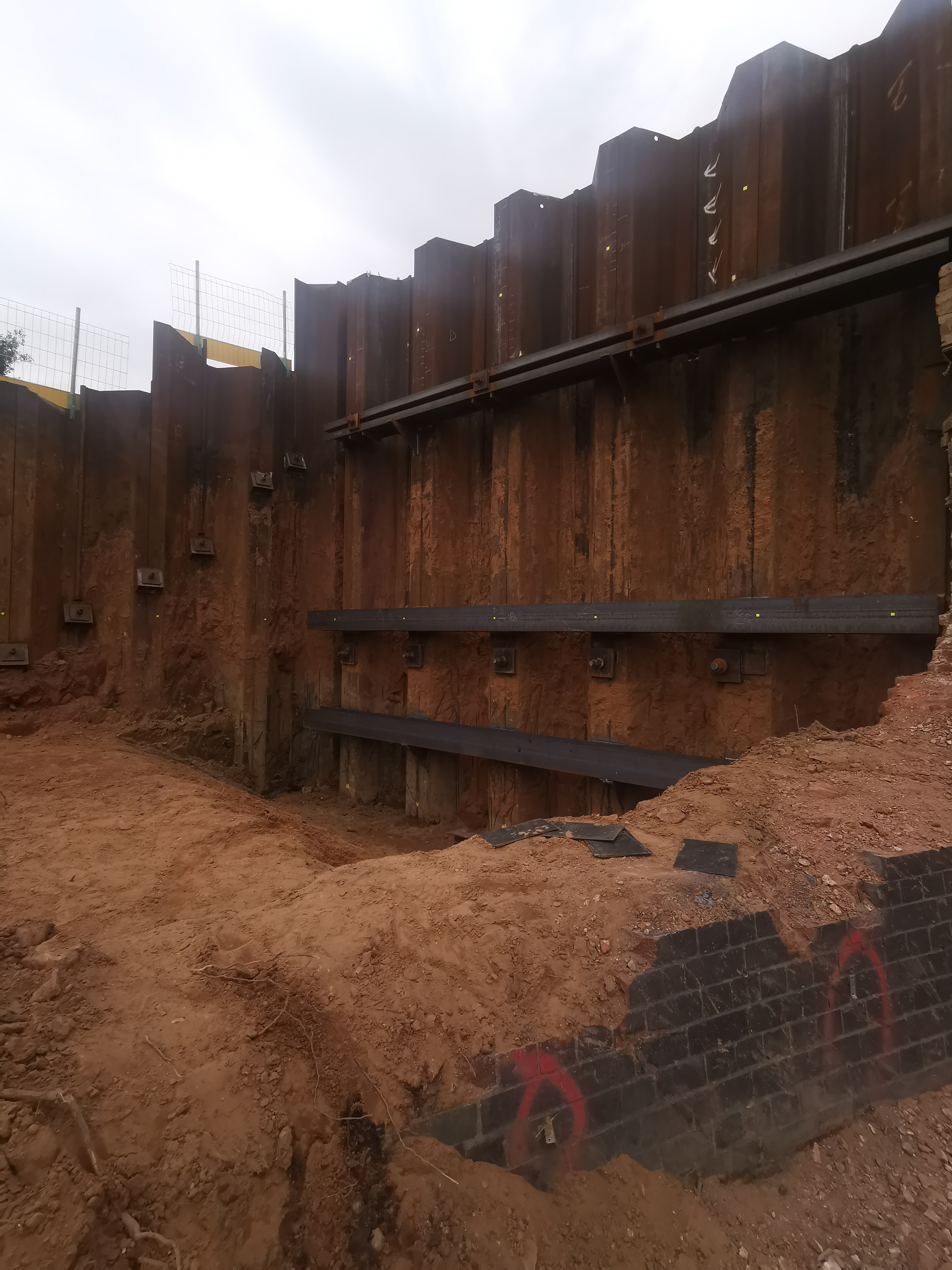
- Repeated the tie-back install at each lower dig level as excavation progressed to hold line and prevent spread.
- Ran day and night to keep the rail live and the bridge swap on programme.
Highlights
Live Rail Constraint
- Maintained rail operations while drilling and installing tie rods through the abutment.
- Sequenced welding and torquing to keep movement within limits before each dig stage.
Top-Down Control
- Tie-back levels matched excavation lifts to resist spread as the abutment was opened.
- Anchor plates and beams on both faces kept the widened opening stable for the larger bridge.
Outcomes
- Sheet piles held line through each excavation stage with the rail in service.
- Bridge removal and install proceeded without unplanned stoppages from movement alarms.
- Programme kept on track by running coordinated day/night shifts.
Gallery
Sequence shows the tie-back fit-up across both faces, anchor plates and rods set through the abutment, welding/torque stages, and the lower dig lifts being locked off.